

Winter Horse Blanket Buying Guide 2026: Keep Your Horse Warm and Healthy
Choosing the right winter blanket for your horse makes all the difference between a comfortable, healthy animal and one that's either shivering or overheating under expensive fabric. The secret? Matching the blanket's warmth level to your horse's individual needs based on their coat, body condition, and your local climate.
Most horses need blanketing when temperatures drop below 40°F if they're clipped, or below 15°F if they have their full winter coat. But here's what makes this tricky: your horse's age, weight, and metabolism all affect their personal comfort zone.
Quick Reference Summary:
- Measure your horse properly: from chest point to tail, add 2-4 inches
- Match fill weight to temperature: 150g for mild winter, 300g+ for harsh cold
- Look for 1200+ denier outer shell and 3000mm+ waterproof rating
- Check fit at shoulders, chest, and hindquarters to prevent rubs
- Plan to rotate 2-3 blankets for proper drying between uses
What Makes a Good Winter Horse Blanket?
Picture this: you've just spent $200 on a "premium" winter blanket, only to find your horse soaked and shivering after the first storm. The problem? Not all winter blankets are created equal.
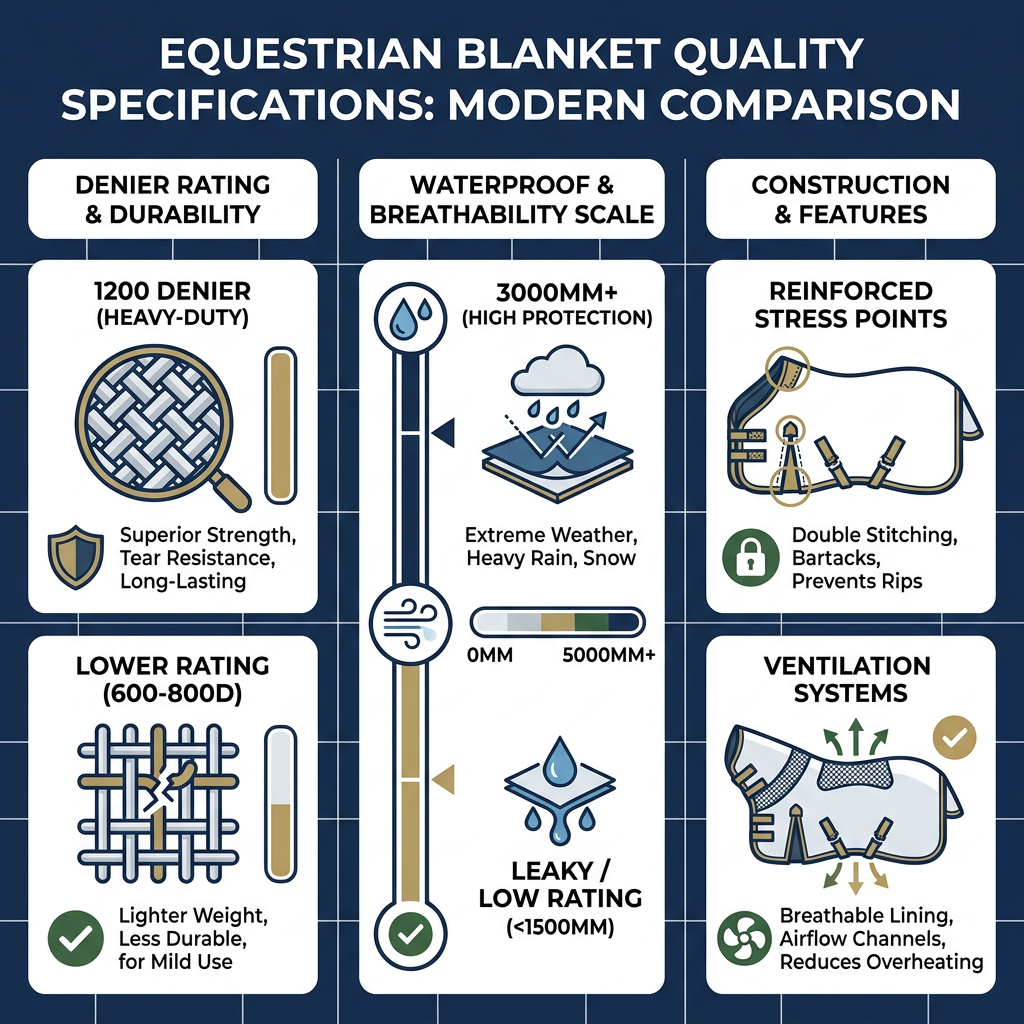
A quality winter blanket needs three things working together. First, you need waterproofing that actually works. Look for a minimum 3000mm waterproof rating and 1200 denier outer shell. These numbers aren't just marketing talk. They determine whether your blanket will hold up to ice, snow, and those sideways winter rains.
Second, insulation that matches your climate. Fill weights range from 0g (no insulation) to 400g+ for arctic conditions. Most horses do well with 150g-250g fill for typical winter weather. Third, breathability matters more than you might think. Your horse generates heat and moisture, even in cold weather. Without proper ventilation, you end up with a sweaty horse under a waterproof blanket. That's a recipe for skin problems and overheating.
Kensington's winter turnout blankets combine all three elements with their proven design that's been protecting horses since 1954. Their blankets feature reinforced stress points and proper ventilation systems that prevent the moisture buildup that causes problems.
How Do I Know What Weight Blanket My Horse Needs?
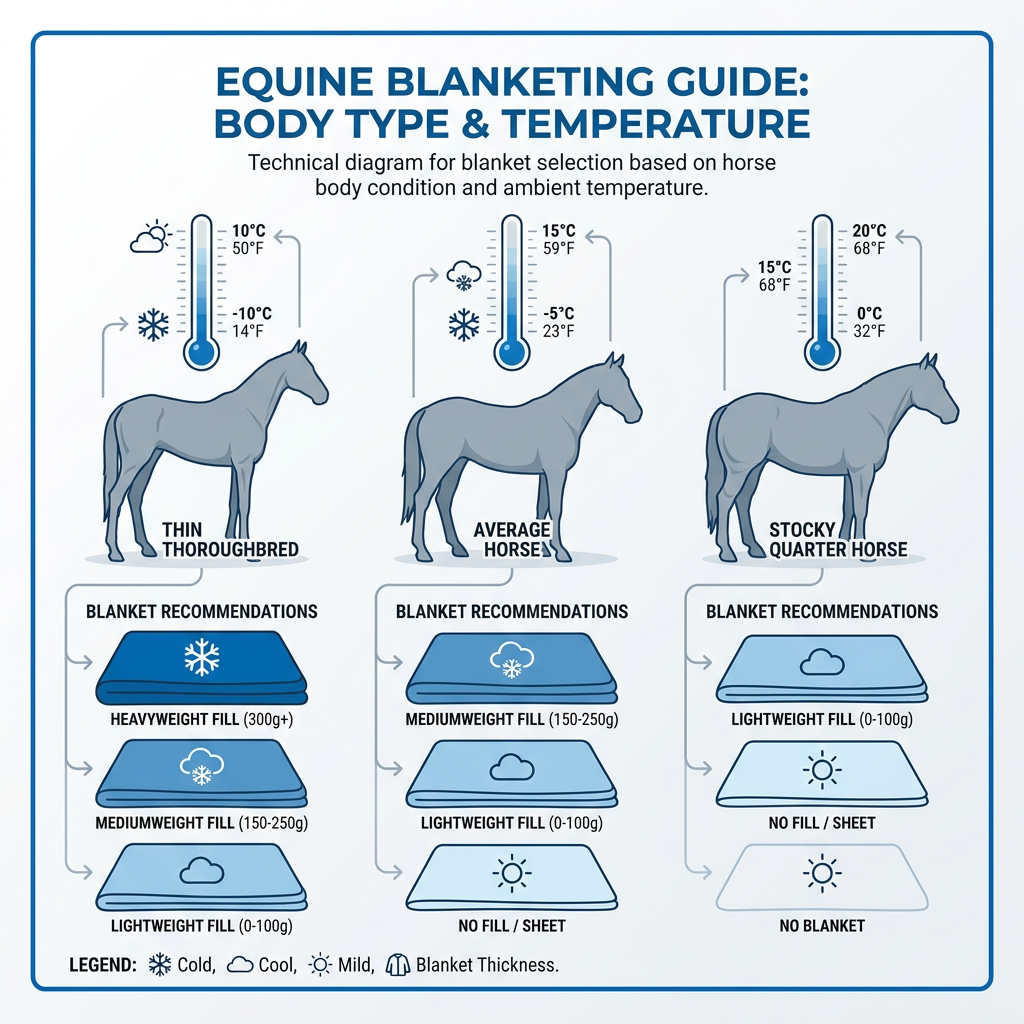
Here's where most people get confused. Those temperature charts you see online? They're a starting point, not the final answer.
A thin thoroughbred and a stocky quarter horse have completely different heating needs. Your horse's body condition score makes a huge difference too. A horse carrying extra weight can handle cold temperatures much better than a lean horse.
Temperature and Fill Weight Guidelines:
| Temperature Range | Unclipped Horse | Clipped Horse | Recommended Fill |
|---|---|---|---|
| 40-50°F | No blanket | Light sheet | 0-100g |
| 20-40°F | Light blanket | Medium blanket | 150-200g |
| 0-20°F | Medium blanket | Heavy blanket | 250-300g |
| Below 0°F | Heavy blanket | Extra heavy | 350g+ |
But here's what the charts don't tell you. An older horse or one recovering from illness might need a heavier blanket than the chart suggests. A young, healthy horse with good body condition might do fine with less insulation. Watch your horse's behavior. Are they seeking shelter constantly? Standing hunched up? They're probably too cold. Are they sweating under the blanket or trying to rub it off? They might be too warm.
How to Measure Your Horse for the Perfect Fit
Getting the right size is crucial. Too small, and you'll create pressure points that cause rubs and sores. Too large, and the blanket shifts around, creating gaps that let in cold air and rain.
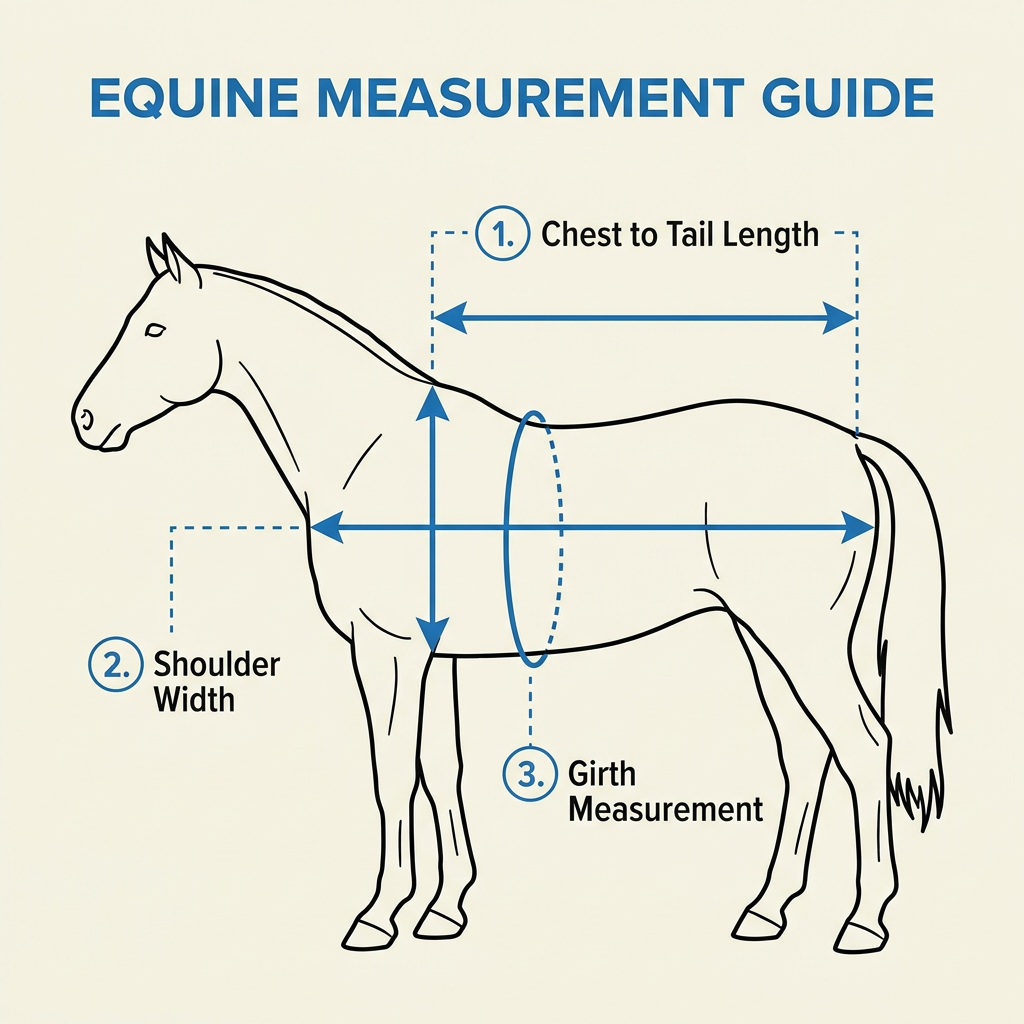
Here's how to measure correctly. Stand your horse square and relaxed. Using a soft measuring tape, measure from the center of your horse's chest (where the base of the neck meets the chest) along the side of the body to the point of the buttock. This gives you the blanket size.
Most horses fall into these ranges:
- Ponies: 48"-66"
- Average horses: 69"-84"
- Warmbloods and larger horses: 84"-90"
- Draft horses: 90"+
You want the blanket to cover your horse well without being so tight it restricts movement. Don't forget about neck coverage. Some horses, especially those with less body fat, benefit from a blanket with a neck attachment. This prevents gaps where cold air and moisture can sneak in.
Understanding Different Types of Winter Blankets
Now, this is where it gets interesting. Not all winter blankets serve the same purpose, and understanding the differences can save you money and keep your horse more comfortable.
Turnout blankets are your workhorses. These are designed for horses living outside or spending long hours in paddocks. They need maximum waterproofing and durability because they'll face everything Mother Nature throws at them. The outer shell takes a beating from fence posts, trees, and other horses.
Stable blankets work great for horses kept primarily indoors. They often have lighter waterproofing since they won't face direct weather, but they focus more on warmth and breathability for indoor use. Under blankets or liner blankets add extra insulation without bulk. Think of them as horse base layers. You can add or remove these under your main blanket as temperatures change.
The beauty of this system? You can mix and match based on the weather. A 200g turnout blanket plus a 100g liner gives you 300g of warmth for the coldest nights, but you can remove the liner for milder days. For expert-tested options that cover all these categories, Kensington's complete blanket collection offers everything from lightweight sheets to heavy-duty turnout blankets, all backed by their lifetime guarantee.
Key Features to Look For
The devil is in the details when it comes to winter blankets. These features separate the blankets that last for years from those that fail after one season.
Shoulder gussets give your horse freedom of movement. Without them, the blanket restricts natural shoulder motion, which can cause muscle soreness and affect your horse's gait. Tail flaps and leg straps keep the blanket positioned correctly. Poorly designed leg straps chafe and create sores. Look for fleece-lined or padded straps that won't dig into your horse's legs.
Chest closures take the most stress. Single buckle systems often fail. Double buckle or snap systems distribute the load better and last longer. Reinforced stress points at shoulders, chest, and tail areas prevent the most common failure points. Quality blankets have extra layers of fabric or specialized stitching in these high-wear areas.
Breathable panels along the spine or sides help regulate temperature and prevent overheating. This is especially important for horses that stay active during winter.
Common Blanket Fitting Mistakes to Avoid
We've all been there. You think you've got the perfect blanket, only to find rub marks or your horse trying to get out of it. Here are the mistakes that cause the most problems.
Too tight across the chest is the number one issue. The blanket should allow for normal neck movement without creating pressure points. You should be able to fit your hand comfortably between the blanket and your horse's chest.
Shoulder restrictions happen when the blanket is too small or doesn't have proper shoulder gussets. Watch your horse move in the blanket. Can they take full strides? Can they put their head down to graze normally? Leg straps too loose or too tight both cause problems. Too loose, and the blanket shifts and twists. Too tight, and you create pressure sores on the legs. The straps should allow the blanket to move naturally with your horse without excessive slack.
Wrong length is surprisingly common. Too short, and your horse's hindquarters are exposed to weather. Too long, and the blanket hangs below the belly, collecting mud and debris. For detailed guidance on proper fitting and sizing, check out Kensington's blanket fitting guide for step-by-step instructions and troubleshooting tips.
Blanket Care and Maintenance That Extends Life
Here's something most people don't think about until it's too late: proper care can double or triple your blanket's lifespan. We're talking about potentially saving hundreds of dollars over the years.
Rotation is key. Your blanket needs time to dry completely between uses. Moisture trapped in the insulation loses its warming properties and can lead to mold or mildew. If you can afford it, buy two blankets and rotate them. One stays on your horse while the other dries completely.
Proper washing matters more than you might think. Most winter blankets can be machine washed in large capacity washers, but skip the fabric softener. It can reduce the waterproof coating's effectiveness. Use specialized blanket wash or mild detergent. Storage affects longevity too. Clean blankets completely before storage. Any dirt, sweat, or organic matter left on the blanket can attract insects and cause fabric breakdown over time. Store in a dry, ventilated area, not in plastic bags that can trap moisture.
Small repairs done promptly prevent major failures. A small tear in the outer shell can quickly become a large rip that ruins the blanket's waterproofing. Keep a blanket repair kit handy for quick fixes.
When to Blanket and When Not To
This is where many horse owners get stuck. The truth is, healthy horses with good shelter often don't need blankets as much as we think they do. Horses are remarkably good at regulating their body temperature.
Definitely blanket when:
- Temperatures drop below your horse's comfort zone based on their coat and condition
- Your horse is clipped for riding
- Your horse is elderly, underweight, or recovering from illness
- Weather conditions include cold rain or sleet (horses handle dry cold much better than wet cold)
- Your horse doesn't have adequate shelter
Consider not blanketing when:
- Your horse has a thick winter coat and good body condition
- Temperatures are above your horse's comfort threshold
- Your horse has access to good shelter and windbreak
- Your horse tends to overheat easily
Watch for signs your horse is comfortable: relaxed posture, normal eating and drinking patterns, and willingness to move around normally.
Regional Climate Considerations
Where you live makes a huge difference in your blanketing strategy. What works in Florida won't work in Minnesota, and that's perfectly fine.
Northern climates (USDA zones 3-5) need the full arsenal: multiple blankets of different weights, waterproofing that can handle ice and snow, and the durability to last through long winters. You'll likely use blankets from October through April.
Moderate climates (zones 6-7) benefit from versatile medium-weight blankets and the ability to layer. Temperature swings mean you need flexibility more than extreme warmth.
Southern climates (zones 8+) rarely need heavy insulation, but waterproofing still matters. A lightweight, breathable blanket for occasional cold snaps works for most situations.
High altitude areas need extra consideration regardless of zone. The combination of wind, temperature swings, and intense UV requires blankets that can handle varied conditions.
Budget Planning and Cost Considerations
Let's talk money. A quality winter blanket is an investment, but it's one that pays off in multiple ways.
Upfront costs range from $100-600 depending on features and quality. Kensington's premium blankets fall in the mid-to-upper range but come with their lifetime guarantee, making them an excellent long-term value.
Feed savings add up quickly. A properly blanketed horse needs 15-25% less hay to maintain body condition during winter. For many horses, this saves $200-500 per winter in feed costs alone. Health benefits translate to lower vet bills. Horses that stay warm and dry have fewer respiratory issues, less stress, and better immune function during winter months.
Longevity factors matter for your budget planning. A $150 blanket that lasts two years costs more per year than a $300 blanket that lasts six years. Factor in the guarantee and replacement policies when comparing prices.
Special Considerations for Different Horse Types
Not every horse fits the standard recommendations. Here's how to adjust your blanket strategy for special cases.
Senior horses often need extra help regulating temperature. Their metabolism slows down, and they may have less body fat. Consider going up one weight category from the standard recommendations.
Ponies and minis have different surface-area-to-volume ratios than full-size horses. They often need more insulation relative to their size. Make sure you're using blankets designed for their proportions, not just scaled-down horse blankets. Draft horses need blankets engineered for their size and movement patterns. Standard blankets often don't accommodate their broad chests and powerful shoulders properly.
Horses with metabolic issues like Cushing's disease or insulin resistance may have difficulty regulating body temperature. Work with your vet to determine the best blanketing strategy. Performance horses in training need blankets that don't interfere with muscle development or movement patterns. Look for designs that accommodate their fitness routines.
For horses with specific needs, Kensington's specialized sizing options cover everything from minis to draft horses with proper proportional design.
FAQ
How do I know if my horse's blanket fits properly? Check for these signs of good fit: no pressure points at chest or shoulders, blanket doesn't shift during normal movement, adequate coverage without dragging on the ground, and your horse moves comfortably and naturally. You should be able to fit your hand between the blanket and horse at the chest.
Can I leave a winter blanket on my horse 24/7? It's better to give your horse breaks from blanketing when weather permits. This allows their skin to breathe and prevents moisture buildup. However, if weather conditions require it, quality blankets can be worn continuously with proper fit and regular checks.
What's the difference between waterproof and water-resistant blankets? Waterproof blankets (3000mm+ rating) completely block water penetration and are essential for turnout in wet conditions. Water-resistant blankets repel light moisture but aren't suitable for heavy rain or snow. For winter use, waterproof is usually the better choice.
How often should I wash my horse's winter blanket? Wash blankets when they become muddy, smelly, or at least 2-3 times per season. Over-washing can damage waterproof coatings, but under-washing allows dirt and sweat buildup that can cause skin problems.
Should I blanket my horse if they're kept in a heated barn? Horses in heated barns typically don't need heavy blankets, but a lightweight stable sheet can provide comfort and keep them clean. Monitor your horse's comfort level and adjust accordingly.
What should I do if my blanket gets torn during the season? Make temporary repairs immediately to prevent the tear from spreading. Use blanket repair tape or patches for small holes. For major damage, professional repair services can often fix blankets at a fraction of replacement cost.
Choosing the right winter blanket doesn't have to be complicated. Focus on proper fit, appropriate insulation for your climate, and quality construction that will last. Your horse will stay comfortable, and you'll have peace of mind knowing they're protected through whatever winter throws your way.