

Finding the Perfect Fit: Draft Horse Fly Masks That Actually Work in 2026
If you've ever tried squeezing a standard fly mask onto your Clydesdale or Percheron, you know the struggle is real. Those massive, noble heads need protection that's built for their size, not stretched to barely fit.
Here's what most horse owners don't realize: draft horses face significantly more eye injuries when wearing improperly fitted masks. We're talking about real health consequences, not just comfort issues.
Picture your 2,000-pound gentle giant trying to work or graze peacefully while a too-small mask rubs against his eye socket or slips sideways every few minutes. Not exactly the protection you had in mind.
You'll discover exactly why draft horses need specialized masks, how to measure for the perfect fit, and what features actually matter when you're shopping for protection that works.
Quick Reference: Draft Horse Fly Mask Essentials
- Size matters: Draft horse heads measure 30-36 inches around the nose vs. 24-28 inches for standard horses
- Eye spacing: 8-10 inches apart (vs. 6-8 inches for regular breeds) requires wider mask design
- Material strength: Must withstand significantly more tension from powerful neck movements
- Replacement timeline: Quality masks last 2-3 seasons when properly fitted
- Cost prevention: Saves hundreds in veterinary bills per fly-related eye incident
Why Standard Horse Fly Masks Fail on Draft Horses
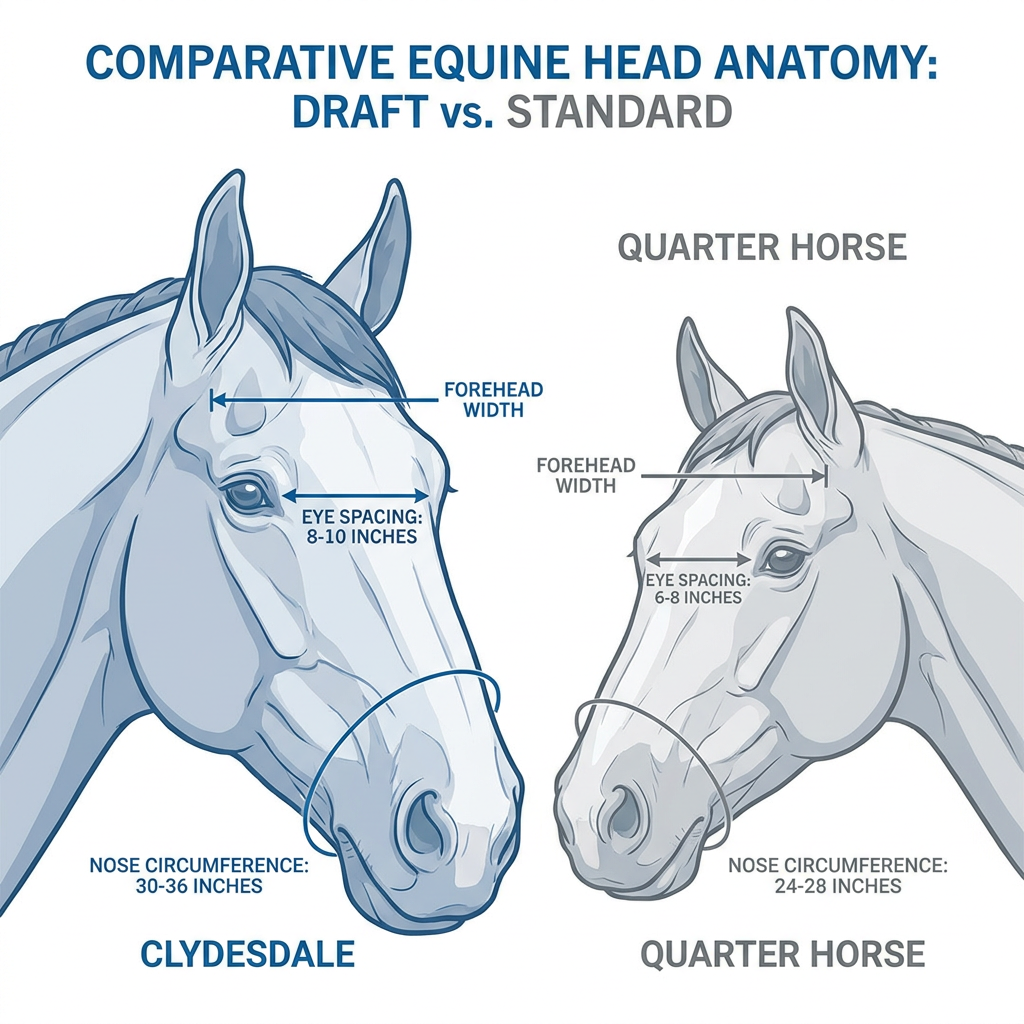
Your Clydesdale's head isn't just a bigger version of a Quarter Horse head. The proportions are completely different.
Draft horses have wider-set eyes, broader foreheads, and longer faces. Their eye spacing averages 8-10 inches apart versus 6-8 inches for standard breeds. When you stretch a regular mask to fit, you're pulling the eye protection out of position.
Think about putting on sunglasses designed for someone with a much narrower face. They might stay on, but they won't protect your eyes properly. Same principle applies to your draft horse.
The stronger neck muscles of draft breeds create different pressure points too. A mask that works fine on a lighter horse gets twisted and repositioned constantly by the powerful movements of an 1,800-2,000 pound animal.
How to Measure Your Draft Horse for the Perfect Fit
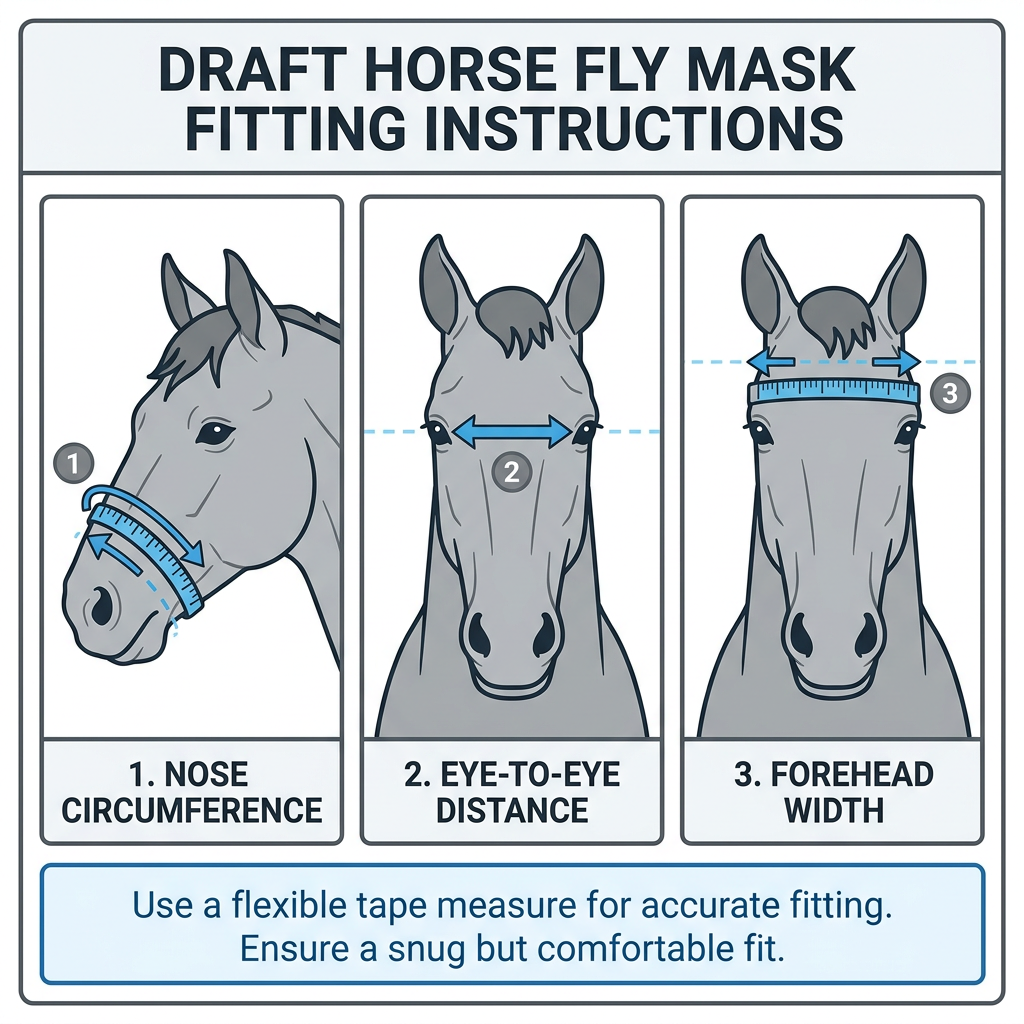
Getting accurate measurements is easier than you think, but technique matters. Here's how to do it right:
Step 1: Nose Circumference Wrap a flexible measuring tape around your horse's nose, just above the nostrils where a halter noseband would sit. Don't pull tight, just snug enough to stay in place. Draft horses typically measure 30-36 inches here.
Step 2: Eye-to-Eye Distance
Measure the straight-line distance from the outside corner of one eye to the outside corner of the other. This tells you how wide the mask's eye openings need to be positioned.
Step 3: Forehead Width Measure across the widest part of the forehead, usually about 2 inches above the eyes. This affects how the mask's crown piece will fit.
Step 4: Poll-to-Nose Length Measure from just behind the ears down to where you took the nose measurement. This ensures the mask won't be too short or too long.
Pro tip: Take measurements when your horse is relaxed and standing square. A nervous or fidgeting horse can throw off your numbers by several inches.
Features That Matter Most in Draft Horse Fly Masks
Not all fly masks are created equal, especially when you're dealing with horses this size. Here's what actually makes a difference:
Reinforced Stitching Draft horses produce more head movement and sweat than average horses. The constant motion and moisture break down standard stitching quickly. Look for double or triple-stitched seams at stress points.
Adjustable Strapping
Fixed-size straps are your enemy here. Your Percheron's head changes shape slightly with the seasons as they gain and lose weight. Adjustable straps let you fine-tune the fit year-round.
UV Protection Rating Those larger eyes need serious sun protection. Minimum SPF 30 is non-negotiable, but SPF 50+ is better. Draft horses have significantly more eye area exposed to UV rays than standard breeds.
Moisture-Wicking Materials Remember that extra sweat production? Cheap materials trap moisture against the skin, leading to fungal infections and discomfort. Quality masks use breathable, quick-dry fabrics.
Strategic Padding Pressure points hit differently on draft horse heads. Look for extra padding at the nose bridge and behind the ears, where the mask makes contact with bone.
Common Fit Problems and Solutions
Even with the right size, you might encounter these issues:
Problem: Mask slides sideways during eating This happens when the cheek straps are too loose or positioned wrong. The mask should sit level across the eyes, not tilted. Adjust the straps so there's just enough room to slide two fingers underneath.
Problem: Rubbing at the nose bridge
Your horse's nose bridge might be more prominent than average. Add a fleece sleeve or padding to the nose strap, or consider a mask with a breakaway safety feature that releases pressure when the horse rubs.
Problem: Gaps around the eyes If you can see gaps between the mask and your horse's face around the eye area, flies can still get in. This usually means the eye spacing is wrong for your particular horse's head shape.
The Kensington draft horse fly masks are engineered specifically for these proportional differences. They offer 90% UV protection and reinforced construction that actually lasts.
Breed-Specific Considerations
Not all draft horses are built the same. Here's what to watch for with different breeds:
Clydesdales tend to have the longest faces and most pronounced Roman noses. They often need masks with extra room in the nose area and longer overall length.
Percherons usually have broader, more rounded heads. The eye spacing tends to be on the wider end of the draft horse range.
Belgians often have the most muscular necks, which affects how straps sit and move. They may need slightly longer straps than other breeds of similar head size.
Shires are often the largest overall, but their heads are typically proportional to their size. Standard draft measurements usually work well.
When to Replace Your Draft Horse Fly Mask
A properly fitted, quality mask should last 2-3 seasons with regular use. Here's when it's time for a replacement:
Watch for mesh developing holes or thin spots. Check if straps lose elasticity or break. Notice when stitching comes undone at stress points. See if the mask no longer maintains its shape when wet. Look for new rub marks appearing on your horse.
Don't wait until complete failure. A mask that's starting to compromise can cause injuries that cost far more than a replacement.
For comprehensive protection throughout the seasons, consider browsing Kensington's complete line of draft horse protection gear, including their specialized sizing guides and fitting tips.
Cost Analysis: Quality vs. Cheap Masks
Let's talk numbers. A quality draft horse fly mask runs $80-120, while budget options might cost $25-40. Here's why the investment matters:
| Factor | Quality Mask | Budget Mask |
|---|---|---|
| Lifespan | 2-3 seasons | 6-12 months |
| Vet bills prevented | $340-680 average | Often causes injuries |
| Replacement frequency | Every 2-3 years | 2-3 times per year |
| Horse comfort level | High | Variable |
| UV protection | 90%+ | Often unrated |
Over three years, you'll spend roughly the same amount on cheap masks as one quality mask. But you won't get the protection benefits or peace of mind.
Professional Tips for Long-Term Success
Here's what professional draft horse handlers do to maximize mask effectiveness:
Daily checks: Quick visual inspection each morning for damage, proper positioning, and comfort signs.
Rotation system: Many pros use two masks, alternating them so one can dry completely while the other is in use.
Seasonal adjustments: Tighten straps slightly in winter when horses lose weight, loosen in summer when they fill out.
Cleaning routine: Weekly gentle washing with mild soap prevents buildup that can cause skin irritation.
For more detailed care instructions and seasonal protection strategies, check out Kensington's draft horse care guides written by equine professionals.
The Bottom Line on Draft Horse Fly Mask Fit
Getting the right fit isn't just about comfort (though that matters plenty). It's about preventing injuries, reducing veterinary costs, and giving your gentle giant the protection he deserves.
Your draft horse's unique head shape and size require specialized design, not just a stretched version of a regular mask. The investment in proper fit pays for itself through better protection, longer mask life, and fewer health issues.
With nearly 70 years of experience in equine protection, Kensington Protective Products understands these specialized needs. Their draft horse masks are engineered for the unique proportions and challenges these magnificent animals face.
Frequently Asked Questions
How do I know if my draft horse's fly mask fits properly? A properly fitted mask should sit level across the eyes without gaps, allow normal blinking and eating, and stay in position during normal activity. You should be able to slide two fingers under any strap, but no more.
Can I use a pony mask on a miniature draft horse? No, even mini draft horses have different proportions than ponies. Their heads are broader and eyes more widely spaced. Use masks specifically designed for mini draft breeds.
Why does my Clydesdale's mask keep coming off? This usually means straps that are too loose or positioned incorrectly. Check that the crown strap sits properly behind the ears and the throat strap is snug but not tight. Some horses are also escape artists who've learned to remove masks.
Do draft horses need fly masks in winter?
Generally no, unless you're in an area with winter flies or your horse has specific eye conditions requiring year-round UV protection. Most draft horses can go without masks in cold months.
How often should I clean my draft horse's fly mask? Weekly cleaning is ideal, more often if your horse is particularly active or sweaty. Use mild soap and warm water, rinse thoroughly, and allow to air dry completely.
Is it normal for draft horses to resist wearing fly masks initially? Yes, the larger size can make masks feel more noticeable at first. Introduce the mask gradually, starting with short periods during calm activities like grooming or feeding. Most horses adapt within a week.