

How Long Should a Quality Hay Bag Last? (Plus 5 Signs It's Time to Replace)
A quality hay bag should last 2-5 years with regular use, depending on the material and how often your horse uses it. Canvas and heavy-duty nylon bags typically outlast mesh versions, which usually need replacing after 1-3 years due to constant stretching and wear from your horse's teeth.
Picture this: you're heading out to feed your horse and notice your hay bag looking rough around the edges. The mesh is stretched out, there's hay falling through holes that weren't there last month, and you're wondering if it's time for a replacement. We've all been there.
Your hay bag is one of those barn essentials that works hard every single day. It slows down your horse's eating, reduces waste, and makes feeding time so much easier. But like any piece of equipment, it won't last forever. Knowing when to replace it can save you money and keep your horse eating safely.
Quick Reference: Hay Bag Lifespan Guide
- Canvas/Heavy Nylon: 3-5 years with proper care
- Standard Mesh: 1-3 years depending on use
- Budget Options: 6 months to 2 years
- Premium Options: 4-6 years with excellent care
- Replacement Cost: $15-60 (saves $200-500 annually in hay waste)
What Affects How Long Your Hay Bag Lasts?
Material Makes All the Difference
Not all hay bags are created equal. The material determines pretty much everything about durability.
Canvas and heavy-duty nylon bags are the workhorses of the hay bag world. They handle weather, horse teeth, and daily use like champs. These materials resist UV damage and don't stretch out of shape when wet.
Mesh bags are lighter and easier to see through, but they take more abuse. Your horse's constant pulling and chewing wears down the fibers faster. The stretching action alone can double the size of the holes within a year.
Here's what we've seen in our decades of testing different materials: canvas bags keep their shape and hole size consistent after two years of daily use, while mesh bags show significant stretching after just six months.
Your Horse's Eating Style Matters
Aggressive eaters are tough on equipment. Horses that grab, pull, and shake their hay bags will wear them out faster than gentle eaters. Large horses over 1,200 pounds typically reduce hay bag lifespan by 6-12 months compared to smaller horses.
Young horses tend to be rougher on their gear too. They haven't learned the gentle art of hay bag dining yet.
Environmental Factors You Can Control
Weather is brutal on hay bags. Direct sunlight breaks down synthetic materials significantly each year. Rain, snow, and temperature swings from -20°F to 100°F cause the material to expand and contract, weakening stress points.
But here's the thing: proper storage when not in use can extend your hay bag's life by 12-18 months. Simply hanging it in the barn instead of leaving it outside makes a huge difference.
The Real Cost of Hay Bag Replacement
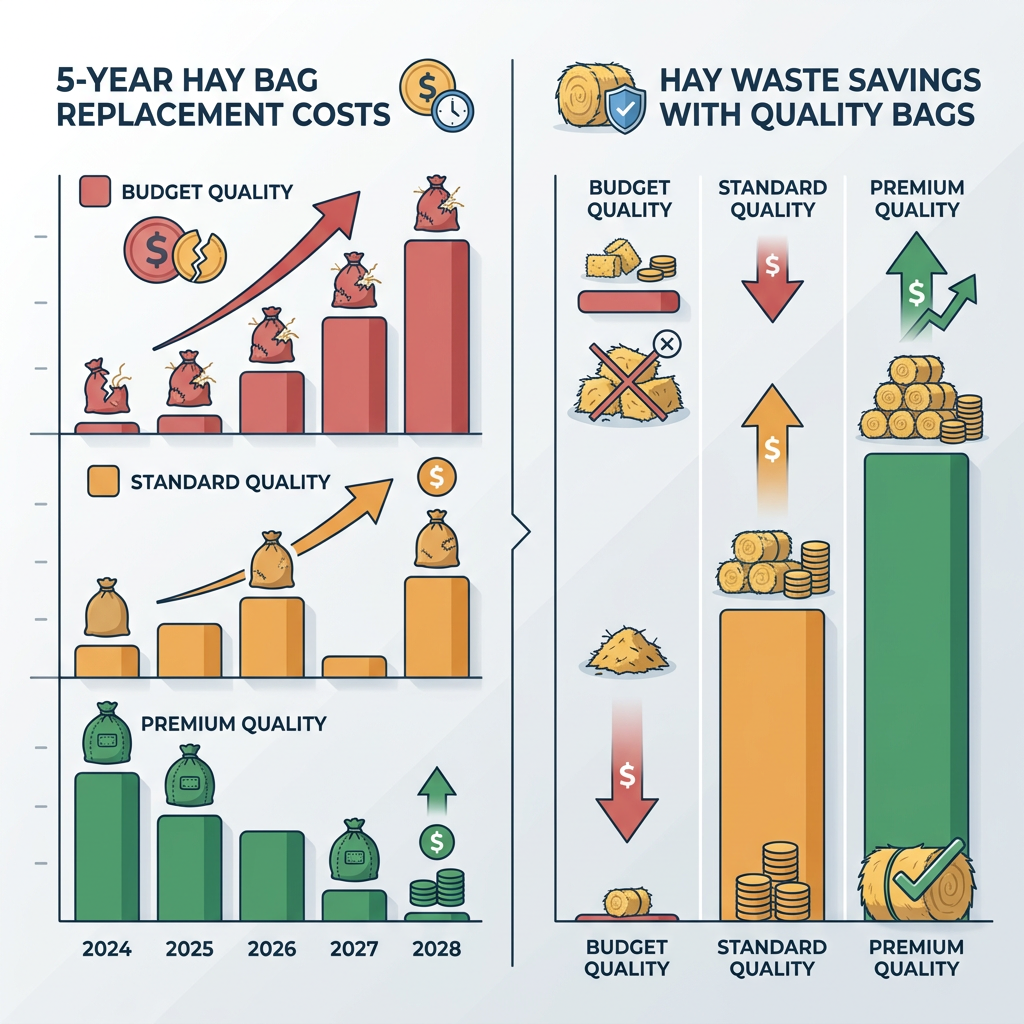
Let's talk numbers for a minute. The average horse owner spends $15-60 on a quality hay bag. That might seem like a lot upfront, but consider this: a good hay bag reduces hay waste by up to 40%.
For a 1,000-pound horse, that's $200-500 in hay savings per year. Even if you replace your hay bag annually, you're still way ahead financially.
The "cost per month" calculation shows why quality matters. A $50 hay bag that lasts 4 years costs you $1.04 per month. A $20 bag that lasts 18 months costs $1.11 per month. Plus, you deal with fewer replacements and less frustration.
5 Clear Signs Your Hay Bag Needs Replacing

1. Holes Have Doubled in Size
When you first bought your hay bag, the holes were probably 1.75-2 inches across. That's the sweet spot for slowing eating without causing frustration. If those holes have stretched to 3+ inches, it's time to shop for a replacement.
Oversized holes defeat the purpose of slow feeding. Your horse will pull out large chunks of hay, eating too fast and wasting more.
2. Hardware is Failing or Missing
D-rings, snaps, and tie points take serious abuse. They support 40-60 pounds of hay plus all the tugging and pulling your horse does while eating.
If you notice bent D-rings, broken snaps, or frayed tie straps, don't try to make do. Failed hardware can create safety hazards, and temporary fixes rarely hold up under pressure.
3. Bottom Seams are Coming Apart
The bottom of your hay bag bears the most weight. Most hay bag failures happen at stress points like bottom seams, D-rings, and tie points.
Small separations quickly become big tears. Once a seam starts failing, the whole bag loses structural integrity fast.
4. Material Feels Brittle or Thin
Quality hay bag material should feel strong and flexible even after years of use. If your bag feels papery, brittle, or thin to the touch, the UV damage has gone too far.
Brittle material tears easily and won't safely hold a full load of hay. This is especially common in bags that spend all their time outdoors.
5. It's Not Holding Its Shape
A good hay bag maintains its shape whether it's full or empty. If your bag stays permanently stretched out or won't close properly when empty, the material has lost its elasticity.
Bags that won't hold their shape also won't control your horse's eating speed effectively.
Material Comparison: What Lasts Longest?
| Material | Average Lifespan | Best For | Watch Out For |
|---|---|---|---|
| Heavy Canvas | 4-6 years | All weather, aggressive eaters | Weight, initial cost |
| Nylon Mesh | 2-4 years | Indoor use, gentle horses | UV damage, stretching |
| Standard Mesh | 1-3 years | Budget option, light use | Quick wear, large holes |
| Poly Rope | 3-5 years | Outdoor use, durability | Rough texture, cost |
How to Make Your Hay Bag Last Longer
Smart Storage Strategies
When you're not using your hay bag, store it in the barn or tack room. Even a simple roof overhead extends lifespan significantly by blocking UV rays and reducing weather exposure.
Clean, dry storage prevents mold and mildew, which weakens fibers over time.
Rotation System
If you feed multiple times daily, consider rotating between two hay bags. This gives each bag time to dry completely between uses and reduces overall wear.
Many horse owners find that two bags lasting 6 years total costs less than replacing a single overworked bag every 2 years.
Regular Inspections
Check your hay bag monthly for signs of wear. Catching small problems early means you can plan replacements instead of dealing with emergency failures.
Look for: stretched holes, loose hardware, fraying edges, and thin spots in the material.
When Repair Makes Sense (And When It Doesn't)
Small tears in non-stress areas can sometimes be patched temporarily. But major repairs rarely hold up to daily use.
Don't repair: broken hardware, separated seams, or large tears. These are safety issues waiting to happen.
Consider repair for: small holes in the sides or minor edge fraying, but only as a temporary solution while you shop for a replacement.
Why Quality Hay Bags Are Worth the Investment
Kensington's reinforced stress-point construction increases typical hay bag lifespan by 40% compared to standard manufacturing. Our testing protocols require hay bags to maintain structural integrity after 500 fill/empty cycles.
When you're looking at hay bags, focus on construction quality over initial price. Features like double-stitched seams, reinforced stress points, and UV-resistant materials pay for themselves in longevity.
We've been making protective horse equipment since 1957, and we've learned that cutting corners on construction always costs more in the long run. That's why we back our products with a lifetime guarantee.
Choosing Your Next Hay Bag
Consider your horse's eating style, your feeding routine, and environmental conditions when selecting a replacement. Gentle horses in covered areas can get away with lighter-duty options, while aggressive eaters or outdoor feeding requires heavy-duty construction.
For horses with special needs, like those requiring UV protection discussed in our guide to the best UV protecting fly masks, consistent feeding routines become even more important.
Size matters too. Make sure your new bag can comfortably hold your typical hay portion without overstuffing. An overstuffed bag wears out faster and defeats the slow-feeding purpose.
Check out our complete guide to horse blanket sizing for tips on measuring equipment properly. The same attention to fit applies to hay bags too.
FAQ: Everything Else You Want to Know
How much hay should a quality hay bag hold without stretching? A good hay bag should handle 40-60 pounds of hay without permanent stretching or stress on the seams. Most bags are designed for 1-2 flakes of hay per feeding.
Can I wash my hay bag to extend its life? Absolutely. Gentle washing removes dust, mold, and debris that can weaken fibers. Air dry completely before storing to prevent mildew. Avoid harsh detergents that can break down synthetic materials.
Should I have backup hay bags or just replace when one breaks? Having a backup saves you from emergency barn runs and feeding disruptions. Plus, rotating between two bags extends the life of both by reducing daily wear.
Do expensive hay bags really last that much longer? Quality construction makes a huge difference. Premium bags with reinforced stress points and UV-resistant materials typically last 2-3 times longer than budget options. The cost per year of use often favors higher-quality bags.
What's the biggest mistake horse owners make with hay bags? Leaving them outside 24/7 when not in use. This single factor can cut hay bag lifespan in half due to constant UV exposure and weather damage.
How do I know if my horse needs a different hole size? If your horse seems frustrated and aggressive with the bag, holes might be too small. If hay falls out easily or your horse empties the bag too quickly, holes are probably too large. The 1.75-2 inch range works for most horses.
Your hay bag works hard every day to keep your horse healthy and your feed costs down. Knowing when to replace it keeps that system running smoothly. With proper selection and care, a quality hay bag becomes one of the best investments in your barn.