

Hay Bags for Horses: 7 Things Every Owner Should Know in 2026
Toss a flake of hay on the ground and within 20 minutes your horse has eaten half of it and trampled the rest into the dirt. Sound familiar? A hay bag fixes that. It holds your horse's hay in a contained mesh or fabric feeder so they have to work a little to pull each bite through the holes, slowing them down, mimicking natural grazing, and making that same flake last two to four hours longer.
The right hay bag can cut hay waste by up to 30%, reduce ulcer risk, and keep your horse calmer and healthier every single day.
Quick Reference: Hay Bag Basics
- Horses need 1.5 to 2% of their body weight in forage daily
- Ground feeding wastes up to 30% of your hay
- Slow feeders can extend a hay serving by 2 to 4 extra hours
- Mesh holes of 1.75 to 2 inches work for most horses; smaller for minis and donkeys
- Hang at shoulder height for the best balance of safety and health
Table of Contents
- What is a hay bag and why does your horse need one?
- What's the difference between a hay bag, hay net, and slow feeder?
- What size mesh hole should your hay bag have?
- How high should you hang a hay bag?
- Are hay bags really safe? Honest answers to your biggest concerns
- Does this work for mini horses, donkeys, and drafts too?
- The hidden health cost of skipping a hay bag
- How to pick the right hay bag: a simple buyer's guide
- FAQ
What Is a Hay Bag and Why Does Your Horse Need One? {#what-is-a-hay-bag}
Horses are built to graze for 16 to 18 hours a day. Their digestive system runs on near-constant, small amounts of forage moving through the gut. When that rhythm gets disrupted, things go sideways fast.
A hay bag holds hay in a contained mesh or fabric feeder so your horse has to work a little to pull each bite through the holes. That "working for it" part is actually the whole point. It slows them down and mimics natural grazing. The same flake that disappears in 20 minutes on the ground can last two to four hours in a good hay bag.
What's the Difference Between a Hay Bag, Hay Net, and Slow Feeder? {#whats-the-difference}
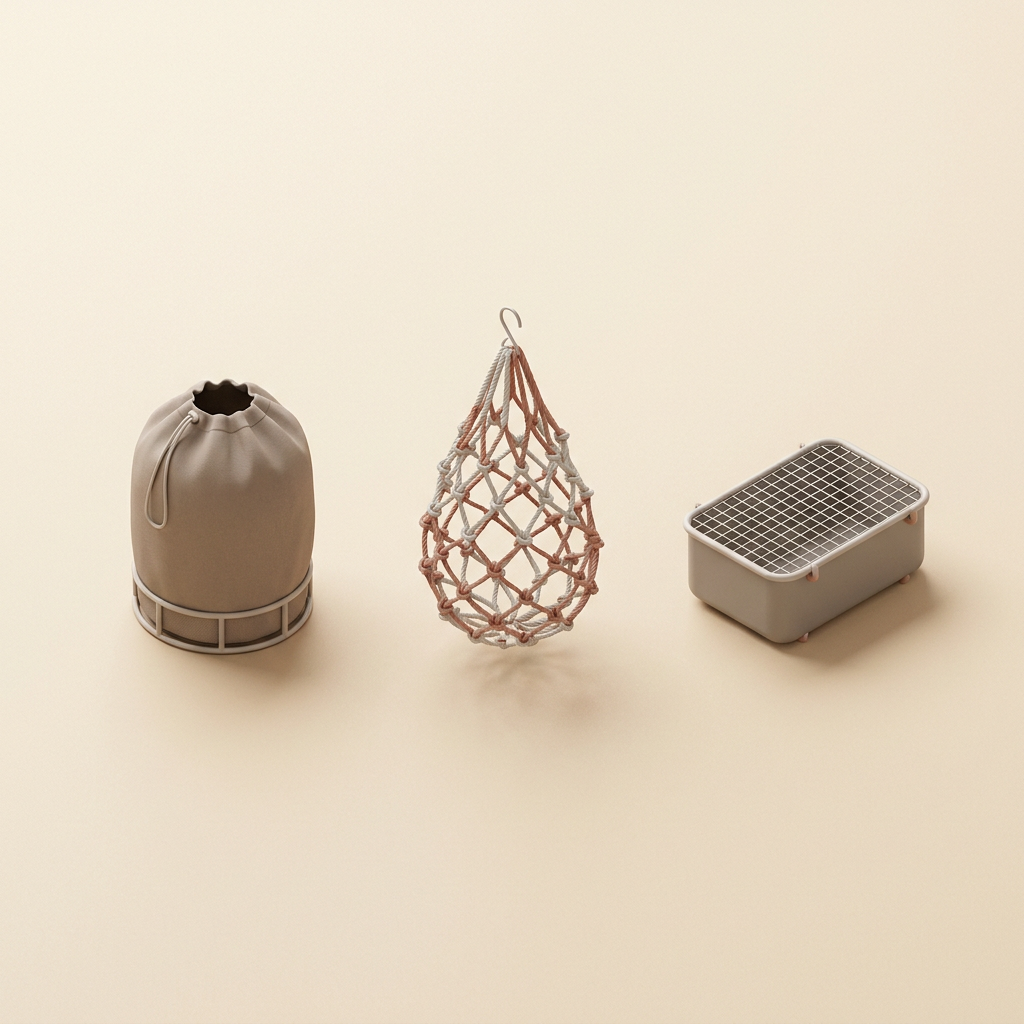
People use these terms interchangeably, but they're not exactly the same thing.
| Type | Material | Best For | Key Benefit |
|---|---|---|---|
| Hay Bag | Fabric or mesh with a solid base | Stalls, trailer travel | Holds shape, less tangle risk |
| Hay Net | Knotted or knotless rope/cord netting | Pasture, outdoor use | Lightweight, very portable |
| Slow Feeder Box/Bin | Hard plastic or wood with mesh top | Herd feeding, ground use | No hanging required |
For most horse owners, a hay bag is the most versatile starting point. It's easy to hang, easy to fill, and easier to keep clean than a rope net. Net-style feeders work great outdoors but tend to wear out faster, especially if you have a horse who aggressively paws or chews at the feeder itself.
If you're planning your full summer horse management routine, our guide on what keeps horse flies away is a great companion read while you're thinking through outdoor feeding setups.
What Size Mesh Hole Should Your Hay Bag Have? {#mesh-size-guide}
This is the question that trips people up most. Go too big and your horse yanks out huge mouthfuls without slowing down at all. Go too small and a normal-weight horse gets frustrated and stressed. Honestly, the mesh size you choose is one of the most important decisions in this whole process. It's not about the bag looking fancy. It's about matching the feeder to your horse's actual metabolic needs.
Here's a simple breakdown:
1.75 inches or smaller works for easy keepers, metabolic horses, horses on a weight-management program, or any horse prone to laminitis.
2 inches is the standard for most average-weight adult horses and a good starting point if you're not sure.
1 to 1.5 inches is the right call for mini horses and mini donkeys. These little guys have significantly lower caloric needs than full-size horses, and overfeeding them is a fast road to obesity and laminitis.
2 to 2.5 inches suits draft horses and large warmbloods. Bigger noses need bigger holes, but you still want some resistance to slow them down.
How High Should You Hang a Hay Bag? {#how-high-to-hang}
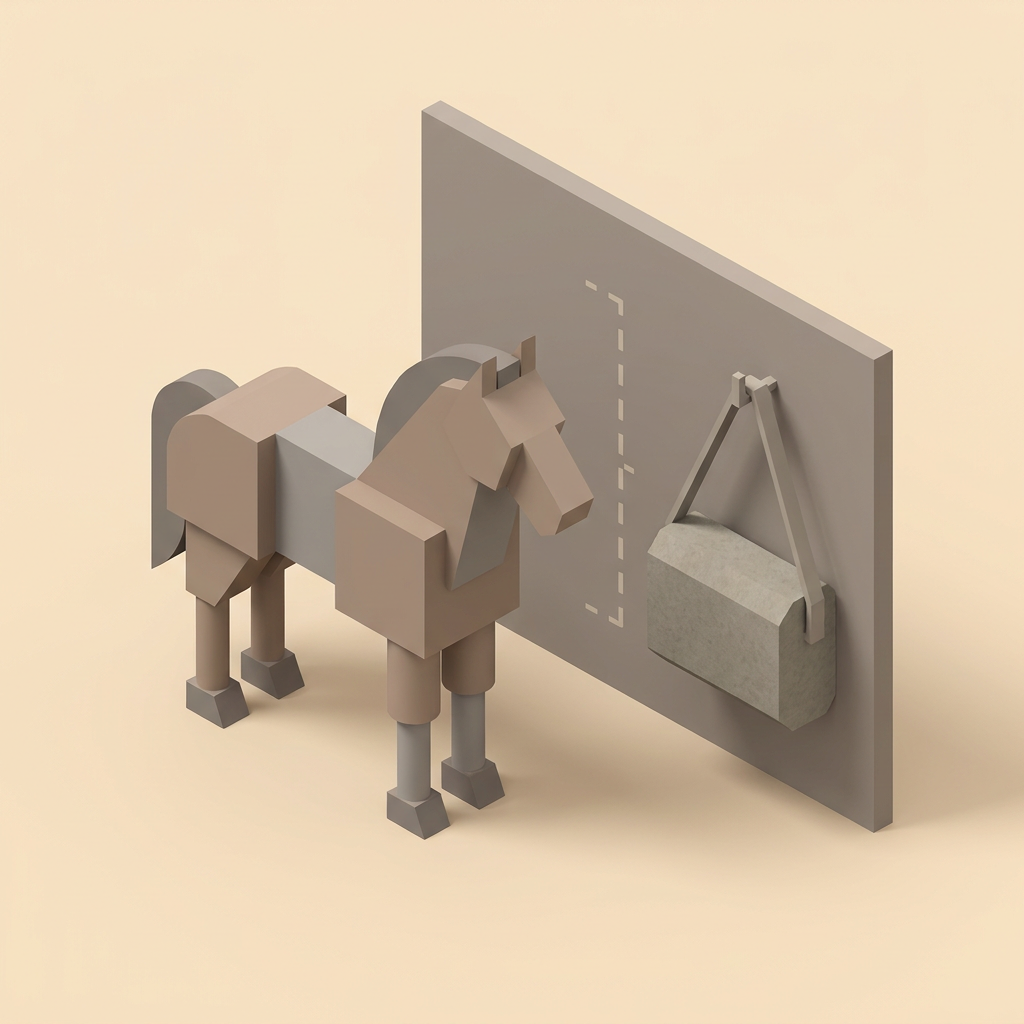
The internet gives completely conflicting advice on this, so here's the evidence-based answer: hang the bag at or just below your horse's shoulder height.
Some people say hang it high so hay doesn't fall on the ground. Others say hang it low to reduce dust inhalation. Both camps have a point, but research from Colorado State University Extension found that bags hung above shoulder height can cause abnormal neck muscling over time and may increase inhalation of dust and mold spores as the horse reaches upward. At shoulder height, your horse eats in a natural, slightly downward position. The dust still falls away from their nose, and their neck and back stay comfortable.
A few practical notes: use a sturdy tie ring or hay bag hook rather than a baling twine loop, make sure the bottom of the bag can't swing low enough for a hoof to reach, and check your attachment point weekly, especially in a busy stall.
Are Hay Bags Really Safe? Honest Answers to Your Biggest Concerns {#are-hay-bags-safe}
Yes, hay bags are very safe when used correctly. But there are real risks worth knowing about, and glossing over them doesn't help anyone.
The hoof entanglement issue is real. The American Association of Equine Practitioners (AAEP) recommends regular inspection of feeders specifically because worn bags with large holes or loose mesh can catch a hoof or shoe. This is more likely when the bag hangs too low, the mesh has stretched or is damaged, or a horse is pawing aggressively at the feeder. The fix is simple: inspect your bag every week. If the mesh looks stretched, frayed, or the holes have grown significantly larger, retire it.
Shod horses need extra attention. A metal shoe gives a hoof much more grip on mesh than a bare hoof does. If you have a shod horse, keep the bag at a height where their front hooves simply cannot reach the bottom. When in doubt, go a few inches higher.
New horses need supervision. The first few times your horse uses a hay bag, watch them for 15 to 20 minutes. Most horses figure it out quickly. Occasionally a very anxious or frustrated horse will paw repeatedly, which is your signal to lower the bag slightly or check the mesh size.
Facebook equestrian groups frequently debate ground-level versus hung placement, with experienced barn managers overwhelmingly recommending hung placement at shoulder height for safety and dust reduction.
Does This Work for Mini Horses, Donkeys, and Draft Horses Too? {#species-guide}
Absolutely, but "one size fits all" is a myth here.
Draft horses need more capacity and larger-opening mesh. A standard horse hay bag may be too small and fill up too fast. Look for bags with higher capacity or plan to refill more often. Kensington's draft horse collection reflects just how seriously the needs of larger breeds deserve to be taken.
Standard horses do well with a 2-inch mesh bag that holds 10 to 15 pounds of hay. Start here if you're unsure.
Ponies should usually be treated like easy keepers unless you know otherwise. A 1.75-inch mesh is the right call. Ponies are notoriously good doers, as any pony owner will tell you.
Mini horses have 20 to 30% lower caloric needs per pound of body weight than full-size horses. A small-mesh bag of 1 to 1.5 inches is essential. Kensington's miniature horse collection is built with these smaller animals in mind.
Donkeys and mini donkeys are even more metabolically conservative than mini horses. The Donkey Sanctuary (UK) has specifically noted that donkeys need slow, restricted forage delivery due to their desert-adapted metabolism and high risk of serious health complications from overfeeding. A 1-inch mesh bag is not overkill for a mini donkey. It's the right call. Check out Kensington's mini donkey collection for gear designed with these little ones in mind.
Nag Bags also emphasizes that knotless netting is gentler on muzzles, which matters especially for donkeys and minis who spend more time working at the feeder due to smaller hole sizes.
The Hidden Health Cost of Skipping a Hay Bag {#hidden-health-cost}
Here's something almost no one talks about. Horse owners focus on the upfront cost of a hay bag, which is fair. But the cost of skipping one is much harder to ignore.
Hay waste alone adds up fast. Ground feeding can waste up to 30% of what you put out. For a horse eating 18 pounds of hay a day, that's over 5 pounds in the dirt every single day. Over a year, depending on your hay prices, that number gets uncomfortable quickly.
Then there's the ulcer risk. Horses that go more than 4 to 6 hours without forage are at significantly elevated risk of gastric ulcers. Equine gastric ulcer syndrome (EGUS) affects an estimated 60 to 90% of performance horses, and treatment costs average $1,000 to $3,000 per course once you factor in omeprazole and diagnostics. A slow-feed hay bag keeps forage moving through the gut continuously, which is exactly what the digestive system expects.
Behavior problems are connected too. Research published in Applied Animal Behaviour Science links total daily foraging time below 6 hours with significantly higher rates of stereotypic behaviors like cribbing, weaving, and stall walking. Those behaviors often lead to vet consultations, chiropractic visits, and additional barn management costs.
A quality hay bag is preventative equipment, not just a convenience item. Think of it the same way you think about a fly mask or a fly sheet. Small investment, big protection. If you're building out your full summer protection plan, our guide on the best fly sheets for pasture horses in 2026 is worth reading alongside this one.
How to Pick the Right Hay Bag: A Simple Buyer's Guide {#buyers-guide}
There are a lot of bags out there. Here's what actually matters.
Mesh size comes first. Match it to your horse's size and metabolism. Everything else is secondary to getting this right.
Material durability matters more than it looks. Reinforced seams and UV-resistant materials are worth paying for, especially if the bag will hang outdoors. A bag that degrades in the sun becomes a safety hazard, not a feeding tool.
Capacity should match your feeding routine. Know how much hay your horse gets per feeding and match the bag size accordingly. One flake? Two? Don't guess.
Check the attachment point. A well-reinforced hanging loop is non-negotiable. A cheap metal ring that breaks is a problem you really don't want to deal with.
Ease of filling matters more than you'd think. Wide openings make barn chores faster. If it's a pain to fill, you'll rush it, and rushed filling leads to overstuffed bags that don't slow-feed the way they should.
Cleanability counts. Hay bags collect dust, mold spores, and hay debris. A bag you can hose out and dry quickly is a bag you'll actually keep clean.
FAQ {#faq}
How many hay bags do I need for a barn with multiple horses? One per horse is the gold standard. Horses are competitive eaters, and a dominant horse will push others off a shared feeder. In a herd situation, adding one extra feeder beyond the number of horses reduces bullying significantly.
Can I use a hay bag in a horse trailer? Yes, and it's one of the best uses. Hay bags keep hay off the floor during transport, reduce waste, and keep your horse occupied on long hauls. Use a quick-release tie to secure it.
How do I stop my horse from destroying the hay bag? First, check the mesh size. If the holes are too small, your horse may chew in frustration. Look for bags made from high-denier, heavy-duty materials. Some horses are simply aggressive feeders and need an extra-durable option. Inspect regularly and replace before damage becomes a hazard.
Do hay bags work for horses kept in pasture full time? They can, but durability matters more outdoors. Look for UV-resistant materials and check the bag more frequently for weather-related wear. Ground-level slow feeder boxes are sometimes a better option for full-time pasture horses.
My horse ignores the hay bag and just paws at it. What do I do? Give it a few days. Most horses figure it out within two or three sessions. You can put a small amount of loose hay on the ground near the bag initially to keep them eating while they learn. Gradually reduce the loose hay until they're working entirely from the bag.
Are hay bags good for horses with respiratory issues? Generally yes. Feeding from a bag rather than the ground reduces the amount of dust your horse inhales at nose level. Some vets recommend soaking hay for horses with significant respiratory conditions, and a hay bag works great with soaked hay as long as it drains properly.