

Horse Blankets for Winter: The Complete Guide for 2026
Horse blankets for winter keep your horse comfortable, dry, and warm when temperatures drop. But here's what most guides skip: knowing WHEN to blanket, WHAT weight to use, and HOW to get the right fit matters just as much as the blanket itself. Get any of those wrong, and you could actually make your horse less comfortable, not more.
So let's talk about all of it.
Quick Summary:
- Horses with a full winter coat generally don't need a blanket until temps drop below 18°F (-8°C)
- Clipped horses may need blanketing at temps as warm as 60°F (15°C)
- Fill weight (lightweight, medium, heavyweight) should match the temperature
- A proper fit prevents shoulder rubs, mane breakage, and pressure sores
- One blanket is rarely enough. A "blanket system" of 2-3 weights is the smarter approach
Table of Contents:
- At what temperature should you blanket your horse?
- What weight blanket does your horse actually need?
- How do you know if your horse is too hot or too cold?
- Why one blanket is never enough
- How to measure your horse for a blanket (and why it matters)
- Blanketing special horses: drafts, minis, donkeys, and seniors
- Waterproofing vs. breathability: why both matter
- How to care for your horse blanket so it lasts
- FAQ
At What Temperature Should You Blanket Your Horse?
This is the number one question horse owners ask every fall. You want a simple answer, not a lecture. Fair enough.
A healthy adult horse with a full winter coat can handle temperatures down to about 18°F (-8°C) without any help from you. Below that, a blanket starts to make a real difference. Above that, most horses with a natural coat are honestly fine.
Here's where it gets more complicated, though. Wind and wet weather change everything. Research shows that wet or windy conditions can lower your horse's effective cold tolerance by 10 to 15 degrees Fahrenheit. So a 30°F day with driving rain and wind feels more like 15°F to your horse's body. That's a big deal.
And if your horse is clipped? The rules flip almost entirely. A clipped horse may need a blanket as soon as temps drop below 60°F (15°C), because you've removed the coat that does the work naturally.
Here's a simple cheat sheet to keep handy when the forecast starts looking sketchy:
| Horse Type | Start Blanketing At |
|---|---|
| Full winter coat, healthy adult | Below 18°F (-8°C) |
| Partial winter coat | Below 30°F (-1°C) |
| Clipped horse | Below 60°F (15°C) |
| Senior, underweight, or ill horse | Below 40°F (4°C) |
| Wet or windy conditions (any horse) | Add 10-15°F to above thresholds |
| Mini horse or donkey | Below 40°F (4°C), wet conditions especially |
What Weight Blanket Does Your Horse Actually Need?

Here's something that surprises a lot of horse owners: the "weight" of a horse blanket doesn't refer to how heavy it feels in your hands. It refers to the fill weight, which is the insulation inside measured in grams. More grams equals more warmth. Simple.
Lightweight blankets (0-100g fill) work best for temps between 30-50°F, or as a layer under a heavier blanket. They're also great for clipped horses in mild weather or as a rain sheet. Medium weight (150-250g fill) is the workhorse of most blanket wardrobes, use it for temps between 20-30°F on a horse with a natural coat. Heavyweight (300-400g fill) is your coldest-night blanket, the one you reach for when temps drop below 20°F (-7°C).
A 2022 survey by The Horse magazine found that 71% of horse owners blanket in winter, but fewer than 40% actually adjust blanket weight based on daily temperature changes. That means a lot of horses are wearing the wrong weight blanket on any given day. Don't be that person.
How Do You Know if Your Horse is Too Hot or Too Cold?
You can't just look at your horse and know. You have to feel.
Penn State Extension recommends a simple check: slide your hand under the blanket at the base of the neck and behind the shoulder. Sweaty or damp and warm skin means your horse is too hot. Cold skin means the blanket isn't doing enough. You want warm and dry. That's the sweet spot.
A horse that's too warm under a blanket isn't just uncomfortable, either. Studies in equine behavioral science show that over-blanketed horses show more irritability, less lying-down behavior (which affects their REM sleep), and sometimes even weaving or stall-walking. It's a welfare issue, not just a comfort one.
Why One Blanket Is Never Enough
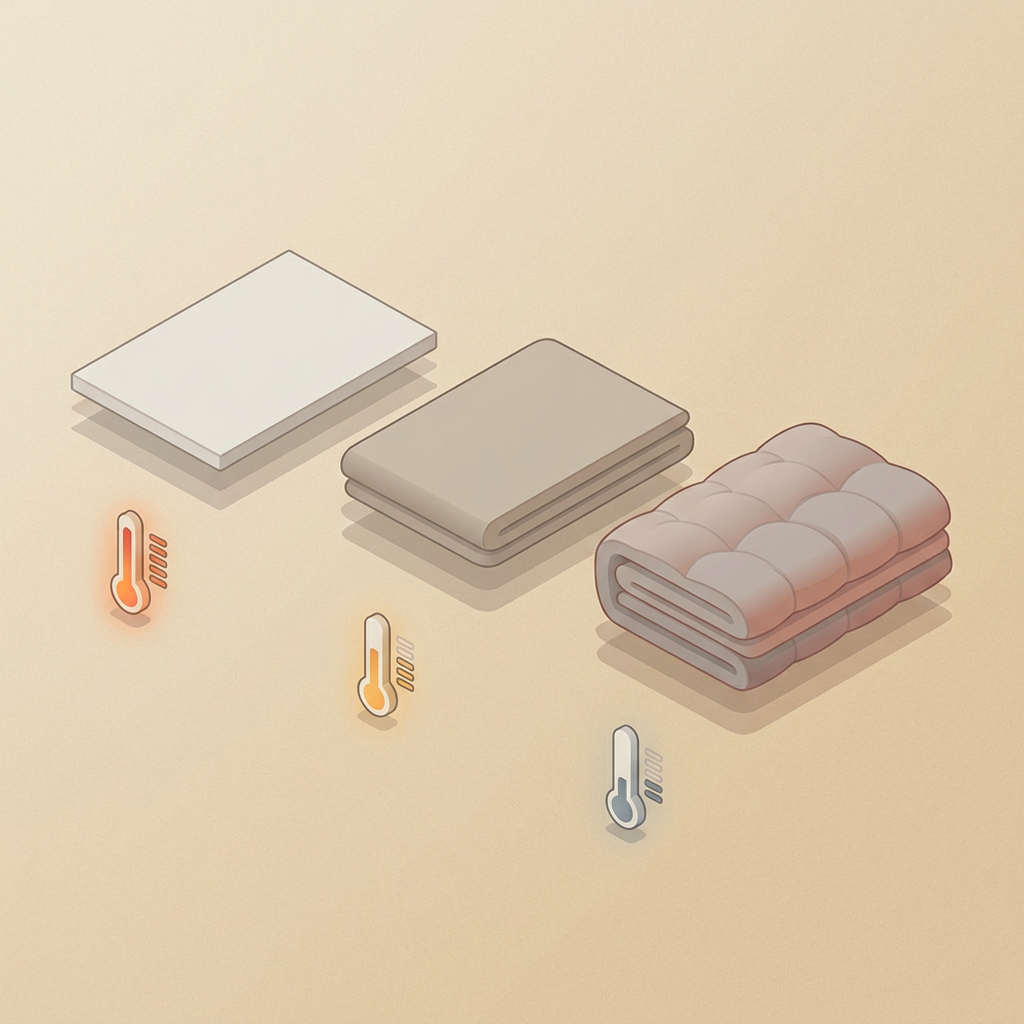
Picture this: it's 15°F and snowing on Monday. By Thursday, it's 48°F and sunny. That kind of swing is completely normal in most parts of the country in winter.
If you only own one heavyweight blanket, your horse is either sweating through a warm spell or shivering through a cold snap. Neither is good. The smarter move is building a blanket system.
Think of it as three layers you can mix and match: a lightweight sheet or liner for mild, wet days or layering; a medium-weight turnout blanket for your typical cold days; and a heavyweight turnout blanket for your coldest nights and storms. This approach lets you match the blanket to the actual forecast, not just your best guess. Research on blanketing practices consistently points to the value of weather-based decisions over leaving the same blanket on all season.
Kensington's winter horse turnout blanket collection is a great place to start building your system. These blankets are designed with the durability and waterproofing you need for real outdoor use, not just a quick trip from barn to paddock.
One more thing worth knowing: horses that wear heavy blankets consistently throughout winter can fail to grow a full natural coat the following year. Blanketing disrupts the photoperiod signals your horse's body uses to regulate coat growth. So when spring comes, you may notice slower or uneven shedding. That's a real consequence of over-blanketing, and another reason to use only as much blanket as your horse actually needs.
How to Measure Your Horse for a Blanket (and Why It Matters)
A blanket that doesn't fit right causes problems fast. Shoulder rubs, mane breakage, and pressure sores can all need veterinary attention. A poor fit also puts stress on the seams and straps, shortening the blanket's lifespan considerably.
Measuring correctly isn't difficult. Have your horse stand square on level ground, then start a tape measure at the center of the chest. Run it along the side of the body, following the curve of the barrel, and end at the center of the tail. That measurement in inches is your blanket size. If your horse falls between sizes, go up, not down. A slightly longer blanket is always safer than one that pulls across the shoulders.
A good fit looks like this: the blanket sits just at the withers, covers the hindquarters without hanging over the tail, and you can slide your hand flat between the blanket and the horse's shoulder without any resistance.
If a blanket does get damaged from hard turnout, don't toss it. Kensington has a complete DIY repair guide that can help you extend the life of your gear and protect your investment.
Blanketing Special Horses: Drafts, Minis, Donkeys, and Seniors
Most blanketing guides are written for a 15-16 hand warmblood or quarter horse. But what if that's not what you're working with?
Draft horses are built differently. Their sheer body mass means they retain heat more efficiently in some ways, but their size also means standard blankets simply won't fit. An ill-fitting blanket on a draft can cause serious pressure sores fast. Kensington's dedicated draft horse collection is sized for these big animals specifically, which makes a real difference.
Miniature horses are small but not fragile. They do, however, have a higher surface-area-to-body-mass ratio, which means they lose heat faster than a full-sized horse. Start blanketing minis a little earlier in the cold. Kensington's miniature horse collection has options actually sized to fit them.
Donkeys are the most vulnerable in wet-cold conditions. Unlike horses, donkeys lack the natural lanolin and guard hairs that repel water. A wet donkey in cold wind can go hypothermic faster than you might expect. If you have donkeys, a waterproof blanket isn't optional. Kensington's mini donkey collection has options built with their specific needs in mind.
Senior horses and horses dealing with Cushings or metabolic disorders may struggle to regulate body temperature even with a full coat. Start blanketing these horses earlier (around 40°F), check under the blanket daily, and talk to your vet about their specific needs.
Waterproofing vs. Breathability: Why Both Matter
Here's a mistake a lot of people make: they grab the most waterproof blanket they can find and call it done. Waterproofing alone isn't the whole story, though.
A horse under a blanket sweats, even in winter. If a blanket can't breathe, that moisture gets trapped against the skin. That creates the perfect conditions for rain rot, scratches, and bacterial skin issues. The best winter turnout blankets have both: a waterproof outer shell AND a breathable liner layer. Look for a denier rating of at least 600D on the outer shell (higher is more durable) and a moisture-wicking inner layer that moves sweat away from the skin.
A soaked blanket with no waterproof outer shell can lose up to 50% of its insulating capacity. So not only is your horse wet, it's now less warm than if it had no blanket at all. Honestly, that's worse than doing nothing.
If your blanket's water repellency has worn off over time, re-waterproofing it once a year can extend its useful life by 3 to 5 additional years. That makes a quality blanket an even smarter long-term investment.
How to Care for Your Horse Blanket So It Lasts
A good blanket is not cheap. Taking care of it properly is just smart economics.
Always follow manufacturer instructions for washing. Most blankets can be machine washed on cold with a gentle cycle, but they should never go in a regular home dryer. Air dry flat or over a fence rail. After washing, the DWR (durable water repellent) coating takes a hit, so re-apply a spray-on DWR treatment after every wash, or at minimum once a season.
Before storing blankets for summer, clean them thoroughly. Dirt and manure left on a blanket over the off-season can degrade the fabric. Store in a breathable bag (not plastic) in a cool, dry place.
Check under the blanket at least every 2-3 days during the season. Look for rubs, hot spots, or wet areas that could signal a fit problem or a waterproofing failure. Catching those early saves a lot of headaches later.
FAQ
Do horses actually need blankets, or is it just something humans do for comfort? Honestly, most healthy horses with a full winter coat and access to shelter and forage don't NEED a blanket in moderate cold. The University of Minnesota Extension notes that a healthy horse with a winter coat can tolerate temperatures as low as -40°F with a good windbreak. Clipped horses, seniors, thin horses, and donkeys do genuinely benefit, though. The key distinction is "need" vs. "benefit." Make the decision based on your horse, not habit.
Can I leave a turnout blanket on my horse 24/7? You can, but you shouldn't go multiple days without checking underneath. Remove the blanket every 2-3 days at minimum to check for rubs, skin issues, and to make sure the fit is still correct. Leaving a wet or poorly fitting blanket on a horse for days at a time is asking for trouble.
Should I blanket my horse if it's already wet? If your horse is wet from rain, putting a blanket on traps the moisture. Either let the horse dry first (with shelter and a cooler if needed), or use a blanket with a wicking liner that manages moisture from the inside out. Never put a dry blanket on a soaking wet horse and leave it on without monitoring.
How do I know if my blanket's waterproofing has worn off? Pour a small cup of water on the outer shell. If the water beads up and rolls off, the waterproofing is working. If it soaks in immediately, it's time to wash the blanket and re-apply a DWR spray treatment.
Does blanketing my horse affect how they shed in spring? Yes, it can. Heavy blanketing throughout winter can disrupt your horse's natural coat cycle, meaning they may shed more slowly or unevenly in spring. If you notice this happening, Kensington has a helpful guide on how to help your horse shed faster after a blanketing season.
What's the best blanket for a horse kept outside 24/7? For full-time turnout, you want the most durable outer shell you can find: 1200D ripstop nylon, a fully waterproof exterior, and a breathable liner. This combo handles rain, rolling, fence contact, and herd play. Kensington's winter horse turnout blankets are built specifically for horses that live outside, not just horses that occasionally step out of a stall.